Bed Architect: The Bedroom as a Silhouette of Wellness
An editorial journey into how bed design becomes a language of sleep, health, and couture living. From antique craftsmanship to modern silhouettes, this feature explores the architecture of rest, the science of slumber, and the subtle luxury of a well-made bed.
A History of Comfort: Bed as Architecture
In the universe of interiors, the bed is not merely furniture; it is a private monument, a stage for repose, and a canvas where architecture and instinct meet. The idea that a bed can be designed with the same reverence as a façade or a staircase is a distinctly modern revelation, yet every era has whispered its own version of “sleep as spatial poetry.” Beds, like rooms, tell stories about how societies imagine rest: privacy and ritual in a gilded chamber, or the pared-down clarity of a modern bungalow where the bed becomes the room’s central sculpture.
The lineage begins with craft and upholstery, travels through the refinement of European furniture making, and arrives at the streamlined, almost architectural language of contemporary platform beds. This continuum—where comfort meets silhouette—proves that a bed can be both intimate and architectural, designed for the eye and tuned for the body. Here, we trace a few constellations in bed design that illuminate how a bed can communicate mood, health, and even virtue.
To appreciate this lineage, we wander across centuries and styles, but we anchor the conversation in three luminous moments and the designers who shaped them. First, the 18th-century artisans who elevated the bed from utility to a showcase of craftsmanship and luxury. Then, the mid-20th century, when a new language of form—curves and planes and honest materials—began to govern the bedroom as part of a holistic living environment. Finally, the present day, in which sustainability, health science, and tactile luxury converge in bed designs that feel both timeless and wearable.
- Craftsmen of the 18th Century: The era of Chippendale and the flush, carved footboard—where a bed spoke volumes about status, taste, and the fine line between ornament and function. The bedframe was a stage for wood, inlay, and hand-rubbed finishes that whispered luxury in intimate spaces.
- Modernism and the Quiet Aesthetics of the Mid‑Century: The mid-20th century reimagined the bed as architecture—low profiles, clean lines, and a celebration of honest materials. This was a turning point where comfort and clarity became inseparable, and bedrooms began to feel like curated rooms rather than afterthought spaces.
- Contemporary Sustainability and Wellness: Today’s bed design embraces ecological responsibility, non-toxic finishes, and ergonomic insight. The bed is no longer just a place to sleep; it is a habitat for health, a structure that supports circadian rhythm, mood, and daily rituals.
Sleep Health and Bedroom Optimization: The Science in Silhouette
The relationship between sleep quality and bedroom design is no longer a footnote in interior magazines; it is a field of study and a design imperative. The way a bed sits in a room—its height, its proximity to windows, the geometry of its headboard—can influence breathing, temperature regulation, and the ease with which the brain transitions into deep rest. Sleep scientists emphasize circadian cues, light exposure, and noise buffering as essential elements that interact with the physical form of the bed itself.
From a design perspective, the bed is a breathing creature of the space. A low, widely floating platform can create a sense of clarity and airiness, especially in smaller rooms, while a taller headboard can anchor a wall and provide a sense of cocoon-like security. The textures, colors, and materials chosen for the surrounding environment—soft textiles, wool blends, natural fibers, and warm woods—reverberate with the same frequencies that signal the body to relax. In a Vogue-worthy bedroom, the bed is both a statement and a sanctuary: it announces taste while inviting restful immersion.
In practice, optimization means thoughtful choreography: strategic lighting that shifts from bright preparation to dim, intimate glow; climate-friendly textiles that regulate humidity and temperature; and storage solutions that keep clutter at bay, because serenity often begins with a clean, organized space. The science undergirding these choices is not elitist; it is practical and accessible. A well-designed bed, paired with smart lighting and mindful arrangement, can improve sleep latency, reduce nocturnal awakenings, and support restorative cycles—delighting the mind and the body in equal measure.
Product Spotlight: The Skyline Bed Frame as Central Silhouette
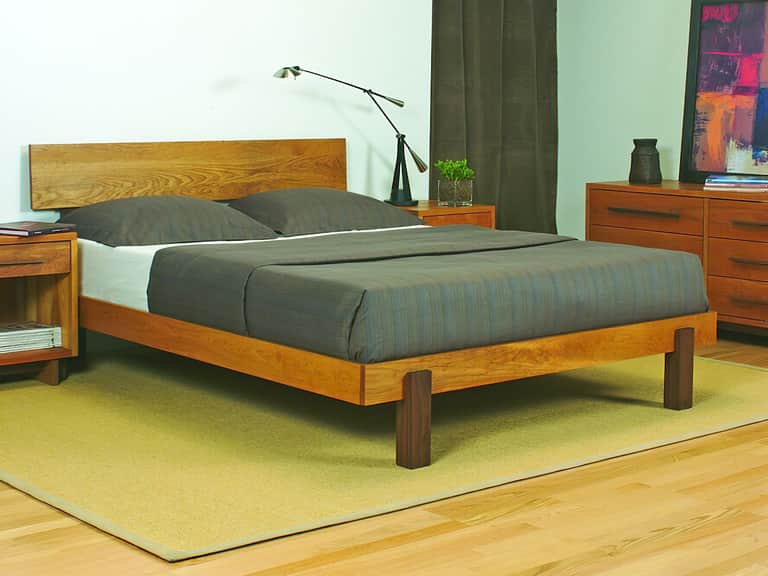
In the dialogue of bed architecture, a single frame can become a defining silhouette—an anchor for a room’s mood, a platform for dreams. The Vermont Furniture Designs Skyline Bed Frame embodies that idea with quiet confidence. Handcrafted in Vermont from natural hardwoods, this piece offers a clean, modern line that remains gracefully adaptable to a variety of interiors. Its understated presence does not shout; it speaks in a restrained eloquence that is quintessentially Vogue in its sense of chic practicality.
- Material and Finish: Solid hardwood available in natural cherry, maple, or walnut with a linseed oil-based finish. The finish is natural, hand-rubbed, and designed to meet high standards for low VOCs, aligning with contemporary wellness priorities.
- Construction: Handmade in Vermont, with care and time-honored joinery that blends modern technology with traditional craft. The result is a bed frame that feels sturdy, refined, and timeless.
- Scale and Adaptability: Platform-style foundation suitable for a range of mattress sizes and configurations, including options that suit contemporary bedrooms with minimalism or warm, organic interiors.
- Practical Details: Center supports on larger sizes for stability, a sleek profile that fosters a sense of openness, and attention to non-toxic materials that support a healthy sleeping environment.
- Price and Availability: Priced at approximately $1,934, presenting a balance of luxury and accessibility for a discerning buyer seeking lasting quality.
This bed frame is not simply a surface for a mattress; it is a core axis of a room’s geometry. Its quiet presence creates the stage on which you wake, apply makeup or shave, and prepare for the day—yet it never competes with your personal rituals. The Skyline Bed Frame is a modern classic that rewards thoughtful bedding, layered textiles, and careful lighting, becoming a central pillar of bedroom wellness.
Note: While visual references heighten the narrative of a Vogue-worthy bed, this article prioritizes the tactile, experiential, and architectural essence of the skyline silhouette. In place of imagery, imagine a clean, refined frame set against softly lit walls, where the grain of the wood catches the eye and the room breathes in a calm, controlled tempo.
Profiles in Design: Three Time-Traveling Figures Who Wrote the Language of Beds
Thomas Chippendale (1718–1779): The Master of Ornamental Quietude
A luminary of 18th-century furniture, Chippendale elevated the bed to a form of decorative architecture. His work in gilded veneers, scrolls, and delicate mouldings demonstrated how a sleeping sculpture could carry a room’s entire sensibility. In his hands, a bed frame became a stage for artistry, with the same attention to proportion and detail that defined palaces. The lesson is clear: even the most intimate object can be a statement about luxury and taste when the geometry is governed by clarity and restraint. For modern bedrooms, this speaks to a principle: a bed can honor history while embracing a contemporary silhouette—quietly opulent, beautifully restrained, and endlessly adaptable.
Chippendale reminds us that the bed is not merely a place to lie down; it is a cultural artifact that can be both intimate and public in its expression. The textures—polished wood, gentle curves, and refined hardware—translate into today’s platform beds that celebrate solid materials, artisanal craft, and a philosophy of long-lasting beauty.
Le Corbusier (1887–1965): The Architecture of Rest
The Swiss-French master of modernism taught that form follows function, but in bedrooms, his ethos translated into a serene, almost architectural quiet. Le Corbusier championed the idea that space could be stripped to its essential lines, where furniture is not decoration but a careful craft of the human scale. In bed design, this translates to platforms and headboards that sit low and clean, with materials that speak honestly of their origin. The result is a room that feels measured, calm, and timeless—a sanctuary rather than a showpiece.
The Le Corbusier ethos invites contemporary designers to embrace restrained silhouettes, to favor the interplay of light and shadow, and to curate a palette that supports sleep: warm whites, soft beiges, and the occasional accent that becomes a mood rather than a distraction. A Le Corbusier-inspired bedroom is a place where architecture and sleep fuse, where the bed reads as a structural element rather than a mere fixture.
Charles & Ray Eames (1907–1979): Comfort as a Language of Form
The Eames duo reframed furniture as an expression of how people actually live. Their work with wood, curves, and ergonomic restraint created a vocabulary in which beauty and comfort coexist, not in competition but in harmony. In the realm of beds, their influence echoes in the way designers approach ergonomics: a platform frame that supports the body with thoughtful proportions, a headboard that invites touch without overpowering, and textures that age gracefully.
For today’s bedrooms, the Eames spirit suggests a prioritization of comfort as design truth. It invites us to select materials that age into character, to craft spaces that invite lingering, and to structure rooms that nurture the sleeper’s sense of ease. The bed becomes a narrative of proportion and tactility, a modernist gesture that remains intimately human.
Patricia Urquiola (b. 1961): The Soft Power of Contemporary Luxury
A contemporary voice that fuses craft with bold tactility, Urquiola’s work embodies a sensibility in which comfort and personality coexist. Her approach to surface, texture, and color creates environments that feel alive, warm, and inviting—the opposite of sterile minimalism. In bed design, this translates to generously cushioned headboards, tactile fabrics, and nuanced color stories that make a bedroom feel like a boutique experience rather than a showroom.
Urquiola’s influence invites homeowners to embrace character without sacrificing sleep quality. It’s a reminder that modern bedrooms can be lavish in texture and calm in air, featuring beds that function with the grace of couture and the practicality of a well-made garment.
Bedroom Wellness: Practical Steps for a Couture Sleep Experience
If the bed is the centerpiece, the surrounding room is the chorus. A couture sleep experience blends design poetry with science-backed practicality. Start with the bed’s height relative to the room’s scale; ensure the top of the mattress aligns with a comfortable gaze when you sit on the edge. Consider a headboard that offers tactile comfort for reading before sleep, or that simply frames the bed in a way that makes the room feel balanced, not busy.
Lighting is a nocturnal conductor. Dimmable overheads, warm-task lamps, and layered lighting create a rhythm that nudges the body toward rest as evening progresses. Temperature control is equally crucial: breathable bedding, natural fibers, and a sleeping environment that can swing between cool and warm as needed throughout the seasons. A well-proportioned bed thrives in a room where airflow is managed and surfaces are chosen for their ability to absorb or reflect warmth rather than trap it.
Storage plays a subtle but vital role. Under-bed drawers, built-in storage drawers in platform beds, and wardrobe organization all contribute to a decluttered space. A calm, organized room reduces cognitive load at night, which in turn supports smoother transitions into sleep. This is the practical couture of wellness: luxury that serves function, beauty that serves peace of mind.
When selecting textiles for the bed and its surroundings, prioritize materials that regulate moisture and temperature. Wool blends, cotton sateen, linen, and organic fibers can all contribute to a nightly ritual that feels luxurious yet non-irritating. Color psychology matters, too: warm neutrals can foster serenity, while a restrained accent color can anchor the space and provide a focal point for the eye without overstimulation.
The Final Silhouette: A Call to Thoughtful Investment
In a world of fast furnishings and disposable trends, the bed invites a different mindset: invest in a silhouette that transcends seasons, a structure built for longevity, and a surface that invites daily rituals with grace. The Skyline Bed Frame demonstrates this philosophy in practical form—an elevated platform that respects both body and space, a design that will remain relevant as trends evolve. The bed is not a costume; it is a partner in your life’s most intimate moments, a construct that bears witness to your health, your rest, and your evolving sense of style.
The bed’s architecture deserves a thoughtful dialogue with the room’s architecture—the way the ceiling line, the windows, and the furniture arrange themselves around it. A bed is a stage, and a well-designed one supports every scene of daily living: wakefulness, slumber, and the rituals in between. To live well is to arrange a space where the body can breathe, the mind can soften, and the senses can revel in atemporal elegance.
Conclusion: Rest as a Fashion Statement That Feeds the Soul
The Bed Architect is not a glossy fantasy; it is a practical romance with the body. It asks you to consider how a bed’s architecture supports your health, how materials speak to your values, and how a room’s harmony can transform sleep from a nightly obligation into a cherished ritual. In this light, the bed becomes couture: a luxury that is not about ostentation, but about the attentive craft of living well.
If you are drawn to a direction that blends sleep science with design sensibility, you are already stepping into a world where rest is both an art and a science. The Skyline Bed Frame, along with a curated collection of platform beds and thoughtfully selected textiles, offers a pathway to that world—where beauty and wellness coexist in a single, elegant silhouette.